Dick Van Der Heijde - Locked In Interview
I had the opportunity to ask Dick about his album which he used AI to create, As he is paralysed and unable to speak or communicate, apart from blinking, a situation that until AI had evolved sufficiently and offered new ways of interactions intervened had no outlet to express his feelings and frustrations, This album addresses his dramatic life change and how he has come to terms with it, adjusted accordingly and can now create and communicare through his music ..
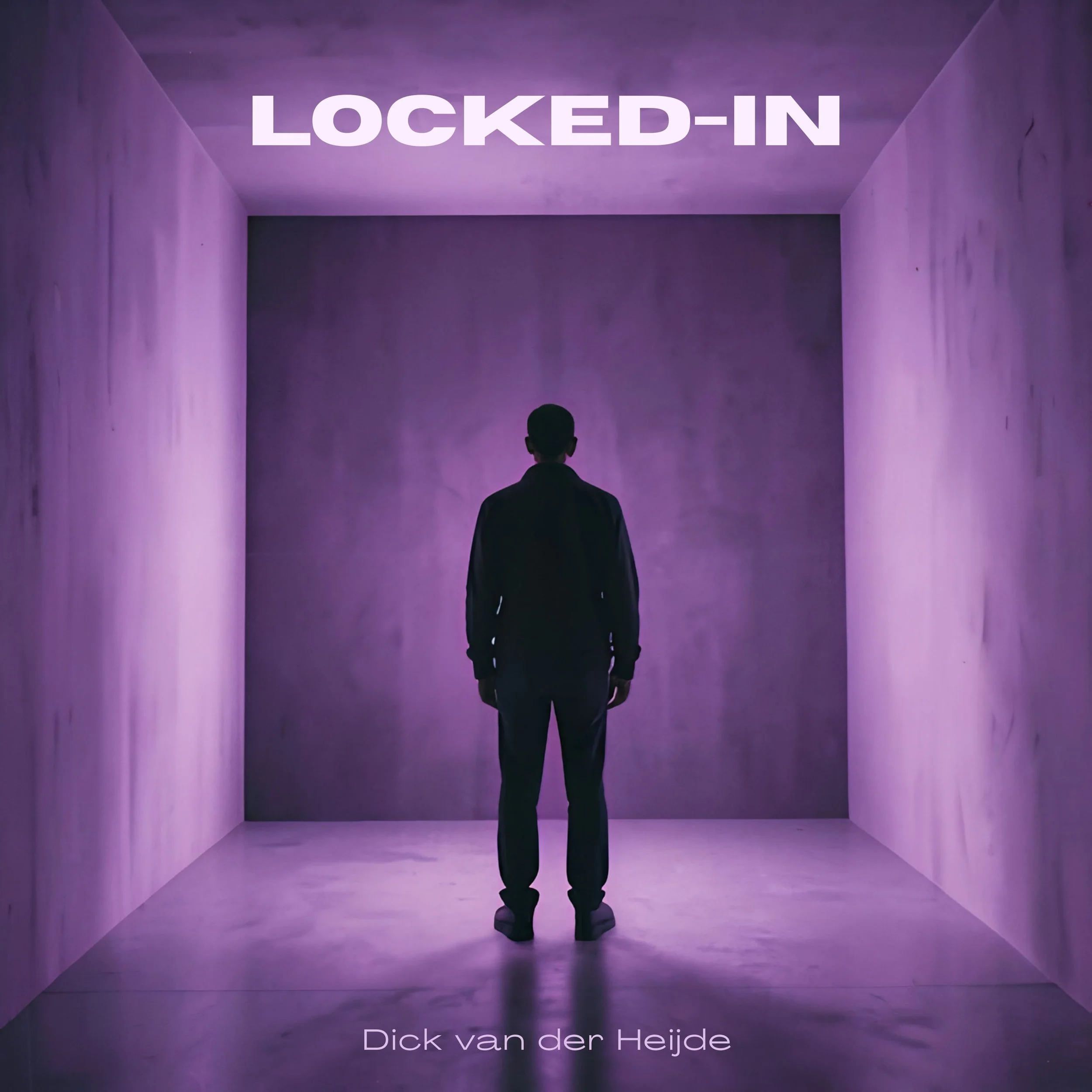
1- I understand you used Suno AI to make this album - how did that work for you?
First of all, I have a paid subscription. That’s necessary, because otherwise you’re not allowed to put the music on Spotify, and that was something I absolutely wanted to do. Like many AI programs, it works by entering prompts. You can specify quite precisely what you want to create, and sometimes we even consult ChatGPT to make the prompt more refined. In addition, there are many options you can fill in, such as style, tempo, type of vocals, lyrics, and so on. In the end, it generates two songs for you to choose from. You simply download the one you like best.
2- Did you have the opportunity to hear the album in progress or was it offered by Suno as a completed article?
It works track by track. I also wouldn’t want to make an album where I have no control over aspects such as variation, flow, and cohesion. In the reviews I write, I often talk about these things, so I feel that on my own album I can’t afford to make a fool of myself in that respect.
Here are a few considerations: I’m completely in love with the sound of a droning cello combined with violin. It immediately became clear to me that these instruments should serve as the counterbalance to the rock songs. The impact of those strings begins with the cinematic The Muller Test. That’s where the violin introduces itself. In Positivity Part One, the cello joins in. Every concept prog album has an instrumental track, so here the cello and violin do the talking. It’s about the positivity around me. In Part Two, it’s about my own positive attitude. That’s why it has lyrics. Another example is the intense Pain Around Me, which is neatly placed in the album’s finale.
3- Do you get to say what you wanted it to sound like? What parameters did you require?
I actually already answered this question in question 1.
4- Did you sample your own voice or did you go with Suno's suggestions?
I also briefly tried to work with a clone of my voice, but there isn’t a single usable fragment available to create a clone from. Moreover, the singer on the album is so incredibly good that I immediately saved him so I could use him in multiple tracks. I would even dare to say I don’t have a better one in my collection. His voice is crystal clear, extremely flexible, and he has the endurance of a horse. My favorite song in terms of vocals is Learning Curve, because it’s about the day they managed to link my blinking to the alphabet. That was a crucial breakthrough for me. He turned the alphabet into something I could store.
5- Does the album sound how you envisioned it in your head?
Everything sounds to my great satisfaction. I would still like to make an epic, but that can come another time.
6- Will you be doing further works?
Absolutely! This album only covers the first month of my Locked-in Syndrome in the ICU. So there is still plenty left to tell.
7- How long did this take you to complete?
That’s hard to say. I think altogether about half a year. Most of the lyrics are based on chapters from my books.
8- Did someone assist you with the technical side of things?
Yes, definitely. I always do this kind of computer work with Michelle de Kort, a caretaker in my team. She is a professional graphic designer and is not afraid to use the computer. We have already made quite a few video clips and also several documentaries about my life. Together we run a TikTok account about locked-in syndrome. She always understands my intentions very well.
If you listen to the album which you can here: https://dickvanderheijde.nl
Author John Wenlock-Smith Saturday 23rd may 2026.